About Matthew · In my own words
Scholar, artist,
mythmaker.
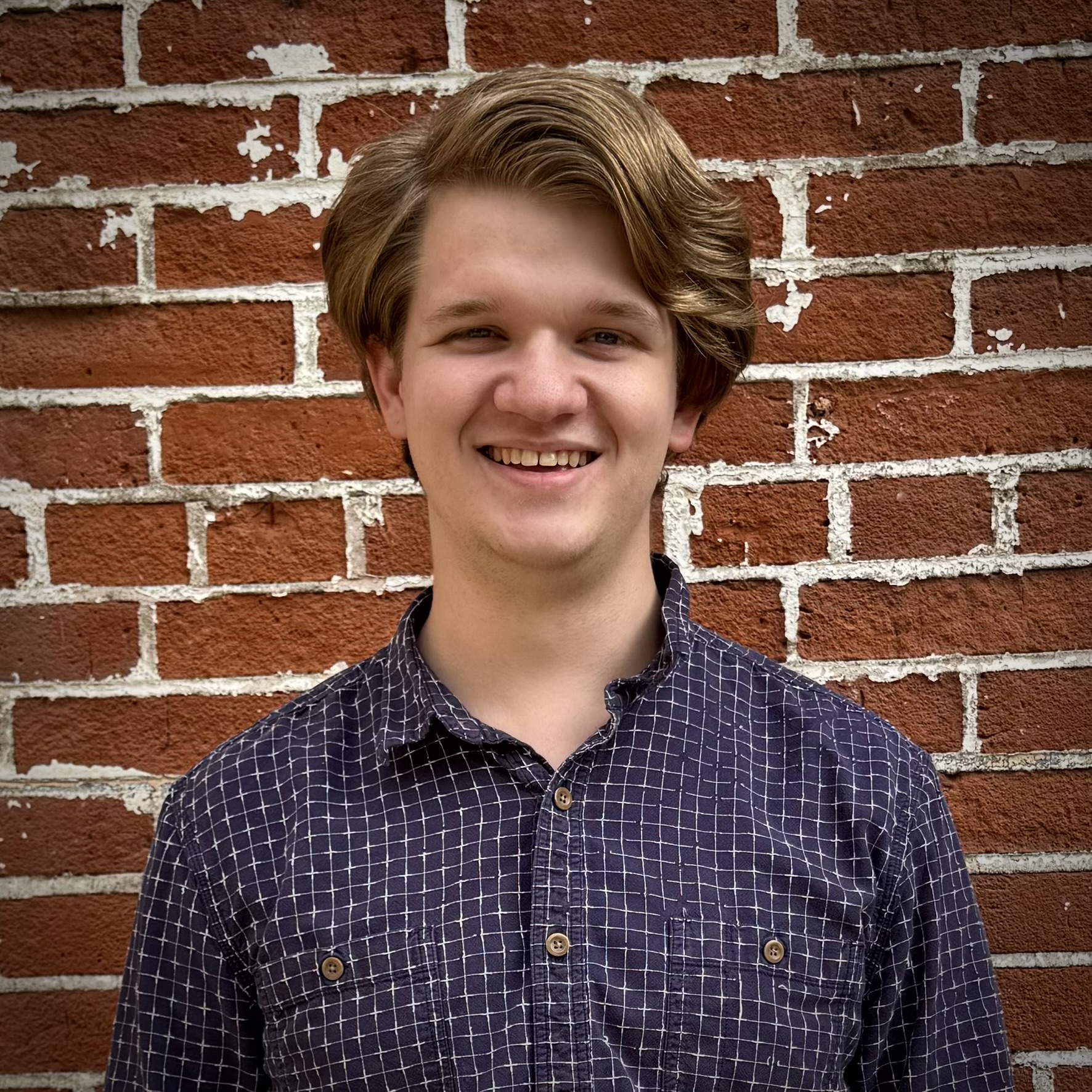
My name is Matthew Wesley Mahoney. I was born and raised in Dallas, Texas. I’m an academic, curator, creative, and activist.
An autobiographical conversation · October 2024
This conversation records my work and plans at the time it was written.
01 / Who I am
Who are you and how can I contact you?
My name is Matthew Wesley Mahoney. I was born and raised in Dallas, Texas. I’m an academic, curator, creative, and activist. I recently graduated from Willamette University in Salem, Oregon, with a Bachelor of Arts degree in Art History. My email address is mattmahoney082@gmail.com and my phone number is 469-630-4627.
02 / Why this site exists
Why does this website exist?
This website exists as a hub for my interdisciplinary work, merging my academic, creative, and activist pursuits. It houses my podcast, creative portfolio, and blog. My podcast takes you on journeys through art history, literature, and media, exploring myths, symbols, and narratives. These stories offer insights into my Autistic experience, our shared human nature, and modern life. While rooted in my perspective, they transcend Autism to reveal universal truths. My blog includes personal reflections, musings, and ongoing projects that span my research in art history, neurodiversity, and public memory. It is a space to share ideas, engage with the community, and showcase the connections between my diverse interests.
03 / What I study
What do you specialize in academically?
I specialize in Surrealism and outsider art, with a strong interest in modern art theory and movements like DADA, Cubism, Expressionism, and Pop Art. I’m particularly drawn to how Surrealism and modernist avant-gardes experiment with forms, play with semiotics, and explore psychological phenomena. Additionally, as a neurodivergent artist, I’ve begun exploring outsider art, often framed by critics as such, and how it connects to my own experiences. Beyond art history, I engage in interdisciplinary humanities research, particularly on the experiences of marginalized communities and public memory. My work includes projects on recovering local histories, like the Colored Knights of Pythias Temple in Deep Ellum, Dallas, and the Fairview Training Center in Oregon, a state institution for the “feeble-minded,” a project I am currently working on. I also theorize about Autistic ways of being, thinking, communicating, and creating through lenses of history, communications theory, politics, queer theory, and disability studies.
04 / Research & scholarship
Can you tell us about your academic career so far?
I’ve completed three research grants at Willamette. My first allowed me to travel to Mexico City, Madrid, Barcelona, and Paris to study Surrealist works, which led to the beginnings of a “counterhistory” of Surrealism, questioning how we define Surrealism and how art historians looked at the modernist avant-gardes. This grant was very ambitious with many of my explorations being further developed in future research projects.
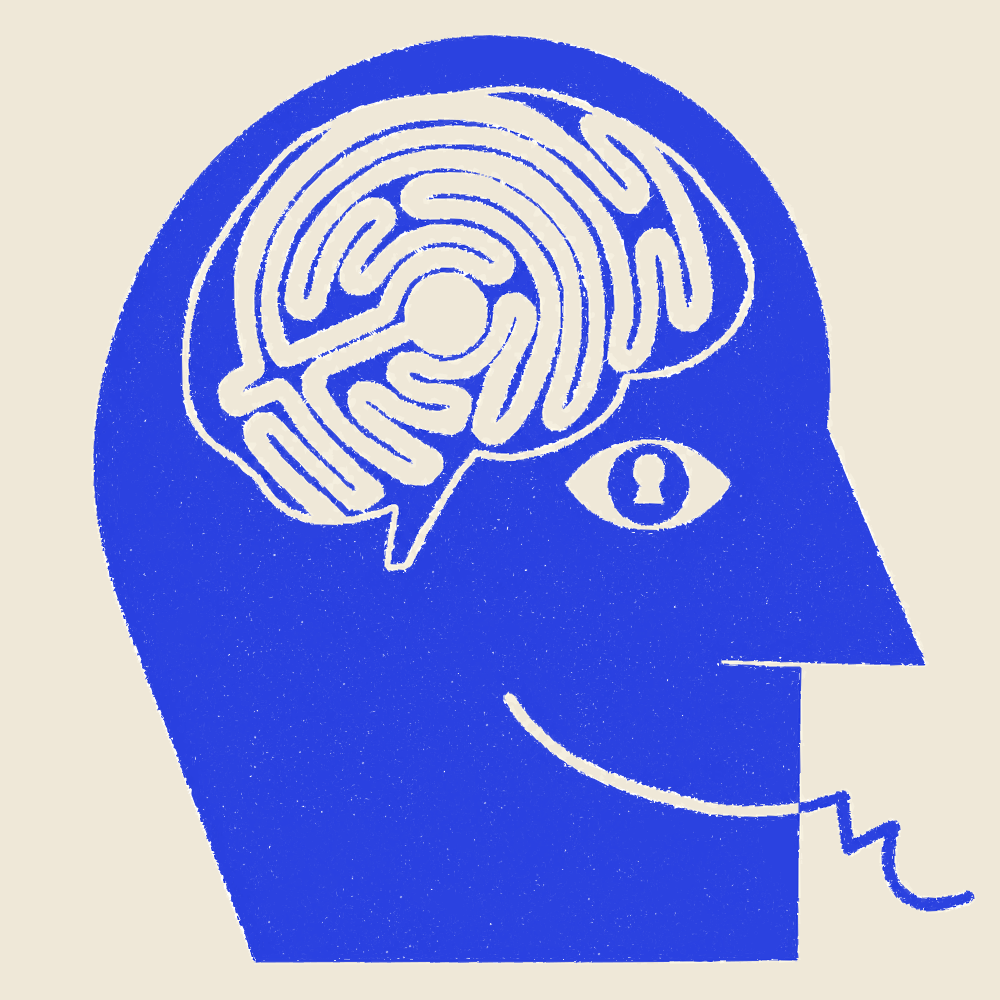
My second grant resulted in my podcast, Matthew Mythology: Stories from an Autistic Art Historian, where I explored interdisciplinary topics, blending storytelling and poetry with theory through autoethnography. I explored connections between research interests and episodes on art history periodization, centering of the psyche in Western thought and art, neurodiversity studies, and labyrinths. In the labyrinths episode, I explored the history of the symbol as well as developed a metaphor about Autism using the symbol.
My last grant was a $10,000 presidential scholarship to create catalogues for five Salvador Dalí portfolios at the Hallie Ford Museum of Art, my university’s art museum. I was only one out of two students to get this scholarship and creating the catalogues required taking and editing photos of the prints, transcribing the texts, and organizing them into small booklets. For this grant, I also curated an exhibition of the prints, gave two lectures on Surrealism and modern art theory in an introductory modern and contemporary art history course, and produced related podcast episodes.
The last two academic accomplishments worth mentioning are my senior thesis on women Surrealist Remedios Varo where I reevaluated women’s place in Surrealism and my role as a co-instructor in a first-year seminar course teaching tools for art history and visual analysis as well as background information about German Expressionism.
05 / Academic goals
What are your academic goals?
I aim to pursue a Ph.D. in Art History and ultimately become a professor. My current academic projects include a project related to Fairview, a Oregon state institution for the “feeble-minded”; a counterhistory of Autism; new frameworks for understanding Autistic ways of thinking, communicating, and creating; an in-depth analysis of the Surrealist manifesto, and a further development of a periodization model to look at modern art inspired by research with outsider art. I also continue my monthly journals which I started during the COVID-19 pandemic, a “brain dump” where I explore both academic and creative ideas.
06 / Curatorial practice
What experience do you have in curating?
I’ve curated three exhibitions, including Singular Visions, which showcased self-taught artists from the permanent collection as well as recent acquisitions from a local studio of neurodivergent artists called Living Studios. I worked for two years at the Hallie Ford Museum of Art, assisting with exhibit installation, writing label copies for various artworks, and giving gallery talks. Currently, I work as a studio assistant and curator at Living Studios, getting to work with their artists and imagining possibilities for exhibiting their work. Before going to graduate school, I would like to work at a museum, developing more skills in curating, handling, and teaching.
07 / Creative beginnings
How did you start as an intellectual and creative?
My creative journey began in elementary school when I drew maps of an imaginary island called Kidsvania; invented gods, monsters, and people; and write stories inspired by Greek mythology and/or about Kidsvania. I made zines of these works under the imprint Matthew Mythology Press. As a lonely Autistic kid, I created in order to escape. Around the same time, I also began to read books to escape as well. I felt bored and under stimulated by my teachers and was drawn to read human anatomy, astronomy, Greek mythology, and my high school world history textbook.
After a hiatus in 6th and 7th grade, I returned to intellectual and creative pursuits. During those early middle school years, I awkwardly tried to fit in with my peers and was faced with growing up when my dad had a stroke at 12 years old. In 8th grade, I got into philosophy, psychology, photography, and drawing. I read philosophy and psychology and got into photography because of my school’s photographer who I became friends with. I remember in particular when I was bored in one of my middle school classes and he took me to high school on the second floor being built. With photography, I began to experiment with composition and color. These experiments in photography as well as explorations of philosophy and psychology brought me back in touch with the wellspring of my subconscious and imagination. I began to have intense dreams, writing poetry about being rejected, and “photographing” my interior worlds with prismacolors on paper. My drawings have intense colors and strong composition and include words as forms and collage, sometimes destroying old sketches to include in new pieces.
In high school, I gained political consciousness; experimented with other mediums like watercolor, printmaking, and painting; and learned about artists from history, my first exposure to art history. Then, I was in a two-year International Baccalaureate diploma art course where I was challenged to develop more of an artistic identity and to develop my first exhibition. I developed logos, a website (not this one), two found object sculptures, three three-dimensional layered wood pieces, a set of tarot cards based on various parts of my personality, and forty postcards with philosophical musings called “Book of Matthias.” I also made zines similar to ones I did in elementary school including editing a collaborative Halloween zine for my high school art club and a collection of stories called “Matthew Mythology Volume 1: A Symphony of Dreams.” Finally, I put together a comparative study looking at Salvador Dali and Gustav Klimt’s works and creating my own work inspired by them. My first exhibition was unfortunately cancelled due to the COVID-19 pandemic.
08 / Creative practice
What is your current and recent creative practice?
In college, I continued my artistic practice informally. I found excuses to make art for my classes and created art covers for my monthly journals inspired by recent dreams, artworks and designs I see in the real world, or images I interpret from random objects such as a dinosaur out of the lines in a bathroom tile. As a resident advisor and art history department coordinator, I designed bulletin boards, posters, and door decorations for my hall as well as the art history offices. I also designed a zine about Autism for my residents as well as a zine called “An Autistic Activist’s Guide to Contemplation and Action” for my Inner Life of Activism course. Working at Living Studios has reignited my creative output. I am currently working on putting together an one-person exhibition for a local gallery as well as an group exhibition for the Living Studios with my work and the work of artists at the studio.
09 / Responses to my work
What have others said about your creative work?
One reviewer described my work as "fascinating," highlighting my ability to create a personal system of visual codes and symbols that resonate with collective memory. They noted the intensity and freedom in my use of color, which they described as both "joyous and frightening," comparing it to artists like Jean Dubuffet and Jean-Michel Basquiat. I have been told my work evokes a unique mix of nostalgia, joy, melancholy, anxiety, and despair, featuring "thought-provoking narratives" and a distinctive use of words as visual symbols that expand their meaning. My art has also been praised for being simultaneously sophisticated and naïve.
I remember being labeled as an amateur and outsider artist by local artists in Dallas, Texas. This was intended as a critique, implying that my work was made solely for myself and not good enough for the art market. However, when I discussed outsider art with my college professors and shared my work, I took the label as a compliment, even if it wasn't meant that way.
10 / Neurodivergent activism
What kind of activism do you do?
During my time at Willamette, I represented neurodivergent students on committees, built a community space for eighteen students, put together community programming, provided regular input and advice to university admin on DEI and student concerns, and did presentations and other public speaking events to educate community members about neurodiversity. Two highlights were training over 70 faculty members on neurodiversity-friendly teaching practices and presenting on Autism as a labyrinth metaphor for the Institute for Continued Learning. Moving forward, I hope to continue my activism, especially through my creative work.
11 / Connecting the work
How do your academic, creative, and activist lives intersect?
I see growing connections between these parts of my life. I want to create more zines including personal musings/reflections, personal stories, poetry collections, and educational/activist zines about various topics including local histories, Autism, neurodiversity, and art history. I also want to get back to the mediums I did in high school such as creating collages and found object sculptures inspired by DADA and Surrealist artists I admire as well as three-dimensional layered wood pieces inspired by Miami artist Alex Yanes. Finally, I would like to experiment with mediums like glass cutting and animation; to design stamps and album covers, and to start making small goods like pins, stickers, greeting cards, and decks of tarot and playing cards.
12 / Art & activism
Could you elaborate on the intersections between your creative practice and activism?
There is a growing convergence between my creative work and activism, particularly as I aim to make my art more political. I want to use my art as a vehicle to communicate radical ideas and to create inclusive spaces for marginalized communities, especially Autistic individuals. I draw inspiration from places like Microcosm Publishing in Portland, as well as from movements such as the 1960s self-proclaimed radical Surrealist group, Resurgence Youth Movement in Chicago, known for their political zines and posters. Protest art also plays a significant role in shaping my vision. The creation and display of the Pride flag, and movements like Hong Kong’s pro-democracy Umbrella Revolution, where umbrellas symbolized resistance against tear gas and pepper spray, are powerful examples of how art can foster global solidarity. I am also deeply inspired by artists like Theaster Gates, who built the Stony Island Arts Bank as a space for Black people to engage with films, literature, and periodicals, including Ebony and Jet magazines. The bank also houses a collection of 4,000 objects that depict stereotypical images of Black people, serving as a stark reminder of the historical realities of racism. Having once considered studying architecture, I am particularly interested in how public spaces can be politically transformative. I aspire to design spaces that not only highlight the work of neurodivergent artists but also challenge viewers to confront the harsh historical realities tied to disability and marginalization. These spaces would foster both reflection and dialogue, creating a platform for neurodivergent voices.