Episode 01 · September 23, 2024
An Introduction to the Matthew Mythology Podcast
An introduction to Matthew Mahoney, the idea of Matthew Mythology, and a podcast where personal story, art history, poetry, and theory share the same room.
Listen to the episode
Press play.
Follow the thread.
The full audio essay is available here and on Spotify.
Open in Spotify ↗The written editionRead the episode script
About 23 minutes of reading · Chapters, citations & download
Guiding Framework
What
The central idea of this episode is that mythmaking and storytelling can function as ways of knowing, and this podcast becomes a place where I can practice and develop those approaches.
Why
The reason for producing this episode is to ground the series in my own story, introducing the experiences and vision that shaped this project and inviting listeners into the framework that guides it.
Introduction
Hello, welcome to Matthew Mythology: Stories by an Autistic Art Historian. I’m your storyteller Matthew Mahoney.
First off, I would like to mention that I took the liberty as I was writing a new episode on Surrealism to rework and rerecord my older episodes including this one to clarify and refine ideas, create better audio, and give life updates. This is the rerecorded version.
This episode will be an introduction to this podcast. It will include an overview of this podcast’s themes, theories, and methodologies as well as important details of my personal story.
As personal storytelling intermixed with critical and academic theory, in an approach known as “autoethnography”, is an important aspect of this podcast, I felt it was important to share some basic details of my story. More details about my life story will also come up in future episodes. I also thought it would be important to go over some of the themes and theories that will appear again and again.
We will first discuss the podcast’s themes, theories, and methodologies.
1. What Is Matthew Mythology?
This podcast is called Matthew Mythology: Stories by An Autistic Art Historian, with the intention of taking you on journeys through art history, critical theory, and general history as well as literature, film, television, and other forms of media, exploring certain myths, symbols, and narratives and then creating new interpretations and thereby, new, revised stories or creating completely new ones inspired by these myths, symbols, and narratives.
The goal in this exercise to reveal something about my Autistic psyche and existence or reveal something about our modern lives or human nature. While these stories will always be from an Autistic’s perspective, they will not always be about Autism. Some stories will focus on the sociological, with eyes on society and culture; some on the psychological, with eyes on the individual and the mind; and some on the philosophical, with eyes on bigger questions.
Alternatively, I considered titles for this podcast such as “Critical Introductions” or “Reconstructed Histories” which are frankly kind of boring titles. This is because every episode is meant to act as an introduction or reconstruction, helping the general viewer without much background in contemporary academic theories, which may be many of you, gain some understanding of the basic concepts, theories, and ideas that academics work with and how they are applied to reinterpret public memory, what and how we remember the past.
This podcast is meant to be a form of public scholarship, deconstructing academic discourses to be understood and applicable to everyday people’s lives. Also, for the general viewer as well as academic audiences, these introductions give you an idea of who I am and what ideas are identified strongly with as well as unique takes on theories. And finally, this podcast intends to creatively combine my art historical knowledge and visual analysis skills with personal stories, critical Autism theory, and broader communications/sociological critique.
Mythmaking, Postmodernism, and Personal Narrative
However, I named it Matthew Mythology for three reasons.
First, I always liked mythology, not just in the literal sense of stories from Greece, Rome, Scandinavia, and Britain, but also in the theoretical sense that histories and storytelling in general is a process of mythmaking. Postmodernism which emphasizes how histories are constructed in the same way as mythologies and autoethnography also emphasizes personal, subjective stories intermixed with theory appealed to me once I came to college.
The second reason is to emphasize the personal storytelling aspect of this podcast. These introductions to various topics are not meant to be some objective, universal perspective, they are from my perspective. This podcast emphasizes elements of creativity, construction and a mythmaking process. Creativity can be defined as the combination of different ideas to invent something new and thought-provoking and in this podcast, I acknowledge the constructedness and inventiveness of my narratives.
The third reason is to honor my younger self. When I was in elementary school, I wrote volumes of stories called “Matthew Mythology.”
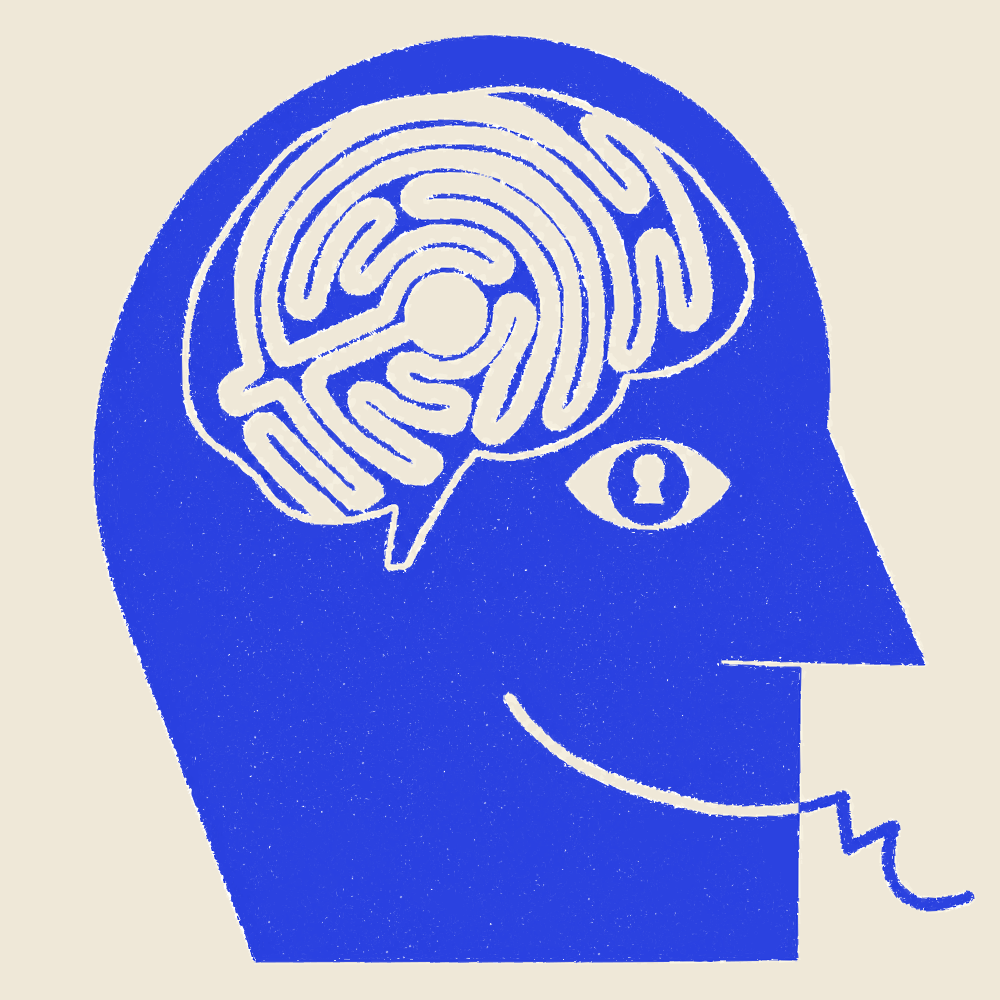
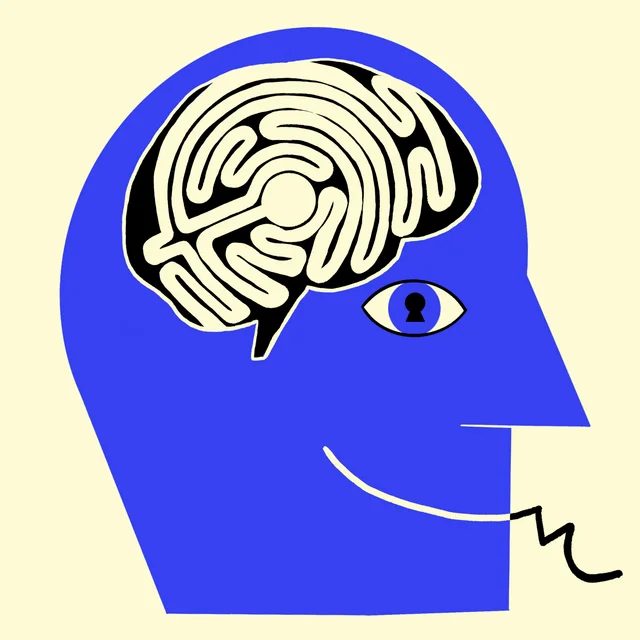
For this podcast, each episode will seem labyrinthian as we go different directions, much like my psyche and hopefully, it is a journey that will make sense whether you’re Autistic or not. I also hope this journey will challenge non-Autistic people and what they think they know about Autism as well as bring comfort and a sense of self-understanding for those who are Autistic.
I believe as we move into the postmodern era and autoethnography becomes a more accepted practice in academia, the goal of academics especially those in the arts and humanities will be to act as storytellers and mythmakers. We should be constructing new knowledge and combining knowledge in new, poetic, and mythical ways.
I believe that creating myths as theories to describe subjective experiences in our modern existence is valuable, especially for me to explain Autistic psychological experience and it is this idea that lies behind my interest in producing this podcast.
Autoethnography, Memory, and Constructed Truths
It is important to understand that myths in this context are idealized, constructed stories. Through reinterpreting stories and making them personal, I am constructing a new personal mythology, idealized, slightly “fictional” constructions, to re/define myself and my relationship with the world. It is similar to how historical and psychological accounts have a slight “fictionality” or idealization to them.
In our current culture, people are becoming more and more aware that idealized narrative framing has been used to hide horrible, unsavory parts of our history, however, this tool can also be used to tell alternative stories that frame and emphasize these parts and challenge the typical story.
By referencing classic myths, symbols, and narratives from literature, media, and art history in this podcast, one of my goals is to blur the lines between reality and fiction, and show how theories and narratives, constructions academics use to understand ourselves and the world, are like myths and poetry in that they speak narrative truths, truth that resemble life and help us understand our experiences but are subjective, stylized, and slightly fictional.
As Arthur P. Bochner and Carolyn Ellis in their book, Evocative Autoethnography, have suggested any reconstruction of our past experiences is slightly fictional and bound to be because memory is always idealized and framed.[1]
Personal Mythmaking in Art and Neurodivergent Creativity
In fact, many artists especially Surrealists like Salvador Dali and Remedios Varo do the same practice of personal mythmaking or automythography, reevaluating and reinterpreting symbols, stories, and ideas especially ideas from psychodynamics and using them to construct stories to explain themselves.
In fact, for my research project last summer, I worked to argue that Salvador Dali and Remedios Varo were different from many Surrealists who were focused on pure psychic automatism, working from a “stream-of-consciousness”, because they were writing personal mythologies, which I define as developed personal, psychological, introspective, and fantastical narratives and worlds that express or reflect what exists in one’s mind. They are created from symbols and concepts from the collective unconscious like Carl Jung’s archetypes combined with the wild imaginations in their heads.
Outsider artists, many neurodivergent, also participate in personal, psychological storytelling, often revealing inner worlds that live in their minds and putting them on tangible mediums for art and writing. Most likely Autistic, Henry Darger after his death was revealed to have created volumes of art and writing about characters known as the “Vivian Girls.”
I, myself, am an outsider artist and do similar work which I will talk about later in this episode.
2. Relevance of Automythography for Everyday People
I feel it is important to say that automythography is not just for academics and artists. It is also an effective approach to knowledge, especially self-knowledge, for everyday people, since it relies on the human strength to understand itself, the world, and its roles in it through constructed stories. In fact, doing so an approach in your own life is not only enriching but could make you psychologically happier and healthier.
Psychologists Dan P. McAdams and Kate C. McLean explore this through their idea of “narrative identity” which “is a person’s internalized and evolving life story, integrating the reconstructed past and imagined future to provide life with some degree of unity… purpose, [and meaning].”[2] Narrative identity allows one to create a sense of self, to construct a re/definition of self.
As human beings are natural storytellers, the process of narrative identity involves discovering episodic memories with plots and event details and constructing stories with symbolic significance and meaning that tell who we are as part of “a coherent account of identity in time.”[3] Human beings “convey to themselves and to others who they are now, how they came to be, and where they think their lives may be going in the future.”[4] In fact, the way I tell my personal story at the end of this episode should give you a sense of my identity including what I identify with.
Narrative Identity, Redemption, and Psychological Health
McAdams and McLean also argue that healthy narrators who enjoy higher levels of mental health, well-being, and psychological maturity are narrators who are able to find redemptive meanings, positive outcomes, or attributions of the self from suffering and adversity.
Healthy narrators are able to construct thoughtful life stories that emphasize personal agency, self-exploration, learning, growth, and positive personal transformation.[5] Redemption of the situation and redefinition of the self allows us to be good at “weather[ing] short-term setbacks [and sustaining] long-term commitments to improving the lives of others,” ultimately adapting and developing.[6]
As human beings, our strength is storytelling and as McAdams and McLean show, we need it to feel enriched and happy.
Identity as a Co-Created Process
McAdams and McLean also share that as human beings become adults, increasing their autonomy from their parents, young adults look to find stories to tell about ourselves and this in turn creates a need to define ourselves, to define who we are.[7]
This idea made me realize that narrative identity is negotiated and co-created through intrapersonal and interpersonal communication. As we get older, our minds work more and more towards understanding ourselves more. Intrapersonal communication or self-dialogue increases “in more abstract ways [as well as in dealing] with the contradictions and paradoxes of life experiences.”[8]
As we get to know ourselves, we seek more personal autonomy and participate more in interpersonal communication leading to telling more of our own stories to others and in return, getting others’ stories as well as their feedback and interpretations to our stories (making our own stories co-created).
In other words, new selves and new identities are co-created with the exchange of different stories in interpersonal discourses. “Over developmental time, selves create stories, which in turn create selves.”[9] This means that the power of mythmaking allows you to create new and better stories about yourself, and thereby allows for self-improvement.
Psychotherapy as Narrative Reconstruction
In psychotherapy or talk therapy, they take advantage of this power of discourse and combine it with the power of redemption. The essential goal is for “therapists [to] work with clients to re-story their lives, often aiming to find more positive and growth-affirming ways to narrate and understand emotionally negative events.”[10]
They learn how to make “narrative sense of suffering in their lives”, how to redeem themselves.[11] The process of redemption involves working towards personal growth, analyzing the situation and what it means for their life story, and then working towards happiness, finding a positive resolution to the event.[12]
In these new stories, clients find they have more personal agency, an “ability to control their world and make self-determined decisions.”[13] Therapists are essentially working to help you create better, more redeeming stories about yourself because our psyches are storytellers with the power to distort how you look at yourself.
Storytelling Versus Scientific Absolutism
Unfortunately, in our current age, we have an almost religious belief in science or oftentimes, pseudoscience masquerading or using the name of “science.” We believe it is not only superior and “objective”, but oftentimes, the only appropriate approach.
This not only invalidates the beauty of more subjective mythmaking and storytelling approaches to knowledge, but also the truth it can bring to societal and cultural problems and the natural happiness it can bring to our personal psyches.
We rely on storytelling and can lie to ourselves, we don’t but we do. Even the most objective forms of knowledge rely on subjective storytelling.
So, in this podcast, I want viewers like you to open your minds up to unconventional approaches to learning and more importantly, enjoy and take pleasure and truth however you would like from the stories I share.
3. My Personal Story
Transition into Personal Narrative
With that, I want to share important details of my personal story. This is important for you to know where I come from and potentially why I think I do.
Early Childhood and Autism Diagnosis
When I was 5 years old, my parents and my teachers started to wonder why I was not speaking yet. It was at this time that I was diagnosed with Autism. Autism is not a big, scary disease or something that makes my life worse. If anything, it enhances it. Being Autistic really just means I have a different kind of mind from the majority of my peers. I think, communicate, and operate differently in the world.
Disclaimer on Representation and Scope
A disclaimer I want to offer as I share my story is that as is the case with anyone on the spectrum, my story is unique. I cannot speak as knowing the experiences of all people with Autism, other neurodivergences, and disabilities. My story is personal, subjective, and descriptive, but not necessarily collective, prescriptive, or objective. That doesn’t mean this story won’t relate to other Autistics, but it may not relate to all Autistics. I believe we are marginalized in similar ways and share more experiences with each other than with neurotypical people. Now with this said, let’s continue the story.
Assessment, Imagination, and Early Cognition
I remember when I was diagnosed with Autism. I remember sitting in a conference room at my elementary school with a nice, older blonde lady. I remember jumping around to different topics in conversation during the meeting. I seemed to be in a conversation with myself, it was scripted and only took my interests. It also confused the assessor.
They had me take all sorts of intelligence tests and they found, not surprising, that I was not great at reacting to others including their interests and emotions. Basically, I was in my own world. I cared more about the internal worlds in my imagination, then the people around me or the reality around me. One might say this is the definition of insanity or the definition of genius.
Saturnian Melancholy and Autistic Self-Identification
In fact, in my first art historical reference in this podcast, I bring up the Neoplatonic thinkers of the Renaissance, predecessors to the Surrealists in their interest in exploring ideas and finding knowledge in the human psyche and, in particular, in the human imagination, who believed that artists like Michelangelo who lived solitary lives and were considered geniuses of their time embodied a “Saturnian melancholy”, an image of a man mad, insane, and depressed while simultaneously a genius, a man so smart that he loves the human imagination and dwells in it but despises its limits and regrets its certain detachment from Earthly reality. This is an archetype I associate with as an Autistic person
Cognitive Profile and Learning Style
They also found that my processing speed was below average. However, my reading comprehension was higher than most of my grade which means even though I read slower, I understand what I was reading better and in a deeper way. I was a sponge absorbing all the information from something.
Early Special Interests and Greek Mythology
When I was little, I developed a special interest in Greek mythology. Back in the early 2000’s when VHS and DVDs still existed, I remember as a little kid checking out multiple DVDs from this collection of animated Greek myths and watching them at home. Through rest of elementary school and middle school, I bought and read multiple books on Greek myths. Greek mythology was perfect for someone with the imagination I had.
Childhood Creativity: Writing, Art, and Worldbuilding
In elementary school, I was also a writer and an artist. Greek mythology and my own imagination inspired me to write my own myths and to document all my imagining of faraway lands, characters, and plots. Like the Surrealists I enjoy studying now as an art historian, my lands, characters, and plots were absurd, and I do dare say, surreal. These self-written myths were called “Matthew Mythology”, in which the podcast title gives homage to.
I also used to draw maps of islands I made up for my stories like Kidsvania and Mythtopia. Back then, I also drew designs for unrealistic inventions and impractical cities. I also thought of how to make a business selling my stories and other products.
Cognitive Overload and Internal Worlds
Many Autistic people have one special interest, but I had many. My mind was a constant and busy network. I had a hard time handling it back then. I became easily overwhelmed. It disabled effective communication. My mind switched faster than my mouth could speak or my hand could write.
It didn’t take me long to learn that I was weird, different, and thinking more than others and that my thoughts not overwhelmed me but others. These practices in my own mind allowed me to escape from elementary school which was a hostile social environment for me.
School Experiences and Misinterpretation
Many adults like my school teachers and their teacher assistants and my Sunday school teachers found me disruptive. At school, while I excelled at reading and writing, I got bored easily in class. The content was not stimulating, and I would often read when I wasn’t supposed to.
I would read history textbooks that had dust on them from not being used in the corner of the classroom or read chapter books and human anatomy books bought by my mom. I remember hiding my books under the desk reading while the teacher lectured. I was seen as a bad kid because I didn’t pay attention as well as seen as a smart ass because I took things literally. I was never being a smart ass, back then, I really thought you meant what you said.
Church, Authority, and Social Alienation
At church, I talked about imagining new chapters to the Bible as if it was one of my chapter books. As you can imagine, some adults were alarmed by my “blasphemy.” In class, I hid under the table or ran out of the room. I got bored and frustrated easily and had a hard time making friends.
The people who would go after me were senior adults, nice and eccentric, who I ended up befriending and talking to. At other places, like school and Cub Scouts, I would befriend adults more than people my age and this happens even now.
Family Trauma and Creative Withdrawal
In middle school, my dad had a stroke. My brother who is also Autistic never overcame the hurdle of being unable to talk. In middle school, I was expected to help out my family instead of continuing my childhood filled with adventures in my labyrinthian mind.
Also, due to ostracizing by my neurotypical peers, the weird worlds I lived weren’t making me friends. During this time, I had vivid dreams. Sleep was the time and place to let my imagination flow. I quit making art in 6th and 7th grade and wouldn’t start drawing again until 8th grade when I considered going to a special art high school magnet.
Adaptation, Masking, and Language
I learned how to control my thoughts and what I shared. I created a funnel from my mind to my mouth in order to speak the neurotypical language. I was selective of what I shared. I learned to adapt as my friend Spencer in Boy Scouts encouraged me to.
Reframing the Autistic Mind
I would learn later that the funnel was only necessary for neurotypical people. When I around other neurodivergent people, we can understand each others’ ramblings and process each others’ thoughts. I also learned later that my mind is not so all over the place but labyrinthian, thinking complex connections and articulations between ideas that others weren’t seeing.
A talent that has helped me in my journey as a young scholar. I am able to appreciate being Autistic now instead of cursing it.
Revival of Art Practice and Personal Visual Language
In late middle school, my interest in art was revived and continued throughout high school and to today. I started as a photographer interested in composition and capturing beautiful colors. I moved into drawing and collage and my vivid dreams became inspiration for me to “photograph” the worlds in my imagination.
My art has been referred to as a sophisticated primitivism or child’s art with themes of anxiety, childhood, and nostalgia. It has been compared with folk art, a label that once offended me. I have thought of it as a “cubo-surrealism” with the visual language of Cubism and the subconscious themes and psychological realism of Surrealism. I enjoyed playing with forms and making them appeal to my Autistic sense of order.
My work contains a very personal mythology, symbolism, and vocabulary. My art like my elementary school interests allowed me to escape from the hostile social environment of high school which existed despite my better masking, pretending to be more neurotypical, in high school.
High School Art Education and Discovery of Surrealism
In high school, I learned more techniques and ventured into painting and 3D mediums as well, carrying over ideas, themes, and techniques as well from my drawings. I also ventured into creating zines, allowing me to restart mythmaking combined with creating art.
Around this time, my art teacher Mrs. Pocta taught us art history alongside our projects. I became exposed to Surrealism which spoke to me as it emphasized psychological realism, documentation of the subconscious, and personal mythmaking; themes and practices in my own work. My senior year of high school, I wrote a paper analyzing Salvador Dali and Gustav Klimt with Freudian and Jungian ideas.
Philosophy, Psychology, and Psychodynamic Frameworks
In late middle school, I also resonated with philosophy and psychology. These became new special interests and escapes as well. They also helped me understand myself and the world around me better.
My more specific interest in psychodynamic discourses, which include Freudian and Jungian ideas, stemmed from this research and continues to influence my current work as I explored these in my research grant last summer and will be in this podcast. Philosophy, psychodynamics, and Surrealism exposed me to people in the past thinking like me, making myself not seem so weird. These ideas will pop up in this podcast.
Leaning Into Autistic Strengths and Intellectual Identity
In late middle school and through high school, I have leaned into my strengths as an Autistic person and an intellectual thinker. My interests in creative writing, mythology, drawing, and thinking outside the box have developed into interests in psychological storytelling, philosophy, and visual art.
My interests in psychological storytelling and visual art definitely comes from existing as an Autistic person with very vivid internal worlds and dreams and trying to document it.
COVID-19, Journaling, and the Turn Toward Scholarship
When the COVID-19 pandemic hit in March 2020, my school went remote, and in this moment, I found time and energy to maximize my creative and intellectual potential. While the pandemic caused a lot of harm and anxiety for the world including my family, it also gave me untethered time to document my thoughts and ideas for the first time.
I began a journaling practice which gave me space to explore all my thoughts and ideas. This helped overcome hurdles in my past thinking, writing, and creating as I didn’t feel the need to remember every thought I have and include every thought I have in my writing and art.
At the same time, I started talking to many professors at Willamette University over Zoom and it was this experience that told me despite never stepping on the university grounds, even less Oregon, that I would go across the country from Dallas, Texas to Salem, Oregon to go to Willamette University, away from my family and its demands and towards finally a home that fit me intellectually.
I have leaned even further into my strengths since being in college.
Academic Direction and Intellectual Commitments
In my freshman year, I became a communications and art history major, interested in psychological realism in art and neurodiversity studies & activism. At Willamette University, I have been exposed to many ideas that I had only been exposed to through reading as well as new ideas that have nurtured or furthered my intellectual thought.
I was only a freshman when I considered the possibility of being an academic or professor in communications and art history. Academia for me has become the new escape despite the less hostile social environment; I am stimulated by thinking and writing about ideal worlds and the world of theory, enjoying living in a Platonic space, in my own little labyrinth.
Intellectual and creative endeavors have always been an escape for me. In these intellectual and creative endeavors, I am always exploring the ontological, epistemological, and the psychological. I am interested in understanding the relationship between being (who we are), experience (what we perceive and experience), and knowledge (what we know and how we know it).
Travel, Surrealism, and Neurodivergent Activism
The summer between my freshman year and sophomore year, I went to Mexico, Spain, and France to study the history of Surrealism, develop new theories about modern art, and problematize discourse about Surrealism.
In my sophomore year, I started the Neurodivergent Student Union and became a student activist for neurodivergent students, giving many speeches, presentations, and trainings problematizing conventional ideas about Autism and promoting more positive and accurate ones.
I dropped my communications major spring of 2022 for various reasons but am still interested in the general field.
Current Work, Scholarship, and Teaching Experience
This year, as I am rerecording these episodes and working on a new podcast episode on Surrealism, I want to share that I am working on a presidential scholarship where I am creating catalogue books of the Hallie Ford Museum of Art’s five Salvador Dali portfolios as well as putting together an exhibition and paper on Dali.
This year, I also helped put together an exhibition of outsider artists, many neurodivergent artists from Living Studios in Corvallis, Oregon at the Hallie Ford Museum of Art. I also was a teaching assistant and helped teach visual literacy as well as guest lectured about Surrealism and German Expressionism.
I hope this provides a good amount of context.
Conclusion
To conclude, we have gone on a journey through my personal story as well as what this podcast is, including its themes and methodologies.
I have shared my interest in mythmaking as an approach to knowledge and why I think we need it in today’s world. I have also shared that this podcast is an opportunity for me to practice mythmaking and storytelling approaches.
At the time of rerecording these episodes, there will be four more journeys planned so far. Next time, we will go over the field of Neurodiversity Studies as well as general history related to Autism. Then, there will be a journey into labyrinths and mazes, and finally, a new journey in multiple parts on Surrealism and modern art.
Endnotes
Arthur P. Bochner, and Carolyn Ellis. Evocative Autoethnography: Writing Lives and Telling Stories. New York, NY: Routledge, 2016, pp. 241-243. ↩︎
Dan P. McAdams and Kate C. McLean, “Narrative Identity,” Current Directions in Psychological Science 22, no. 3 (2013): pp. 233-238, https://doi.org/10.1177/0963721413475622, pp. 233, 236. ↩︎
Dan P. McAdams and Kate C. McLean, “Narrative Identity,” Current Directions in Psychological Science 22, no. 3 (2013): pp. 233-238, https://doi.org/10.1177/0963721413475622, pp. 233. ↩︎
Dan P. McAdams and Kate C. McLean, “Narrative Identity,” Current Directions in Psychological Science 22, no. 3 (2013): pp. 233-238, https://doi.org/10.1177/0963721413475622, pp. 233. ↩︎
Dan P. McAdams and Kate C. McLean, “Narrative Identity,” Current Directions in Psychological Science 22, no. 3 (2013): pp. 233-238, https://doi.org/10.1177/0963721413475622, pp. 233-235. ↩︎
Dan P. McAdams and Kate C. McLean, “Narrative Identity,” Current Directions in Psychological Science 22, no. 3 (2013): pp. 233-238, https://doi.org/10.1177/0963721413475622, pp. 233-234. ↩︎
Dan P. McAdams and Kate C. McLean, “Narrative Identity,” Current Directions in Psychological Science 22, no. 3 (2013): pp. 233-238, https://doi.org/10.1177/0963721413475622, pp. 236. ↩︎
Dan P. McAdams and Kate C. McLean, “Narrative Identity,” Current Directions in Psychological Science 22, no. 3 (2013): pp. 233-238, https://doi.org/10.1177/0963721413475622, pp. 236. ↩︎
Dan P. McAdams and Kate C. McLean, “Narrative Identity,” Current Directions in Psychological Science 22, no. 3 (2013): pp. 233-238, https://doi.org/10.1177/0963721413475622, pp. 235. ↩︎
Dan P. McAdams and Kate C. McLean, “Narrative Identity,” Current Directions in Psychological Science 22, no. 3 (2013): pp. 233-238, https://doi.org/10.1177/0963721413475622, pp. 235. ↩︎
Dan P. McAdams and Kate C. McLean, “Narrative Identity,” Current Directions in Psychological Science 22, no. 3 (2013): pp. 233-238, https://doi.org/10.1177/0963721413475622, pp. 234. ↩︎
Dan P. McAdams and Kate C. McLean, “Narrative Identity,” Current Directions in Psychological Science 22, no. 3 (2013): pp. 233-238, https://doi.org/10.1177/0963721413475622, pp. 235. ↩︎
Dan P. McAdams and Kate C. McLean, “Narrative Identity,” Current Directions in Psychological Science 22, no. 3 (2013): pp. 233-238, https://doi.org/10.1177/0963721413475622, pp. 235. ↩︎
Original episode notes · September 23, 2024
About this episode
This is an introduction to myself, the podcast, and what I plan to do with this podcast.