Episode 02 · September 24, 2024
Neurodiversity Studies
An introduction to neurodiversity studies as a field for understanding Autistic and neurodivergent lives through critical theory, cultural studies, sociology, and anti-oppression pedagogy.
Listen to the episode
Press play.
Follow the thread.
The full audio essay is available here and on Spotify.
Open in Spotify ↗The written editionRead the episode script
About 28 minutes of reading · Chapters, citations & download
Guiding Framework
What
The central idea of this episode is that neurodiversity is not simply a clinical category but a lived, cultural, and philosophical framework, one that reshapes how we understand minds, identities, and ways of knowing.
Why
The reason for producing this episode is to introduce listeners to the foundations of Neurodiversity Studies, clarify key models and concepts, and offer a grounded, accessible entry point for anyone who wants to better understand or support neurodivergent people, including through the lens of my own Autistic experience.
Introduction
Hello, welcome to Matthew Mythology: Stories by an Autistic Art Historian. I’m Matthew Mahoney.
This episode will be an introduction to neurodiversity studies, an emerging field in academia that explores the experiences of Autistic and other neurodivergent people using theories within critical theory and studies, cultural studies, sociology, and anti-oppression pedagogies. In the same way, there is queer studies exploring cultural ideology, societal oppression, and divergent experiences within sex and gender; neurodiversity studies explores all these things within neurology.
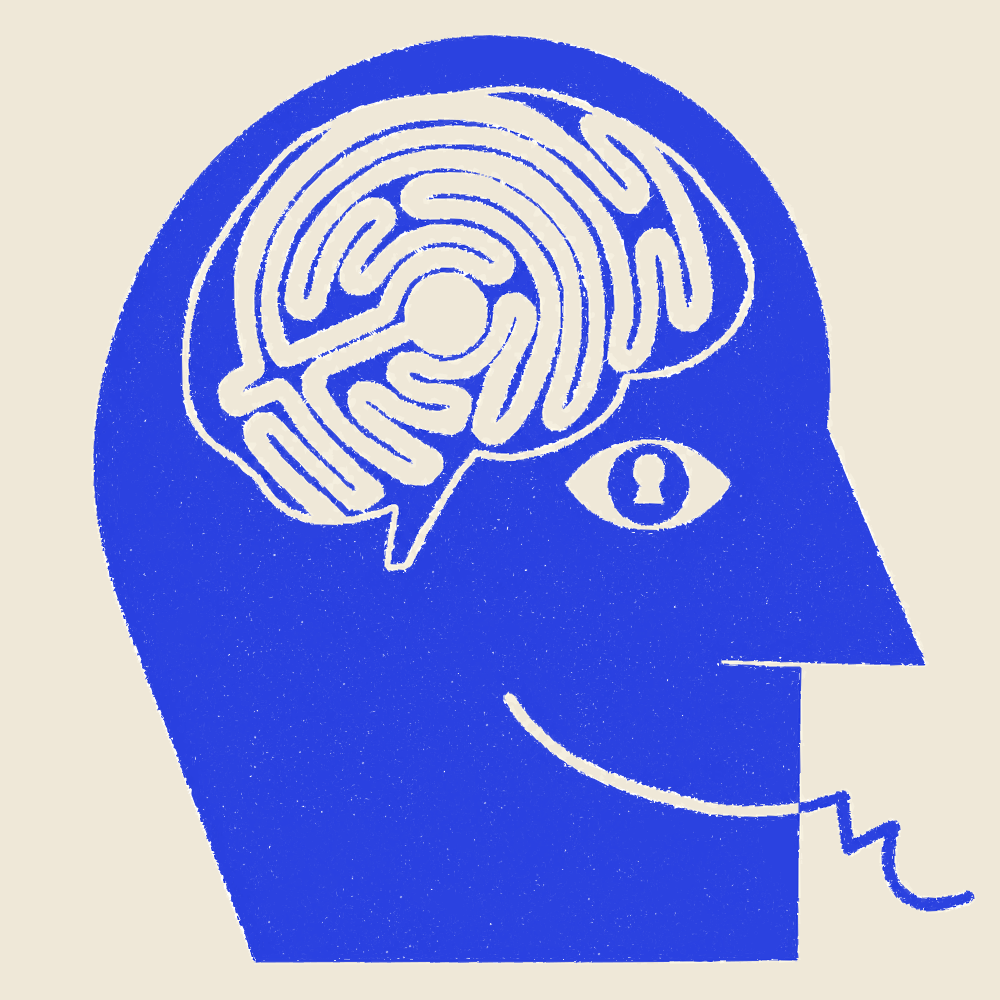
While I am an art history scholar, I am also a scholar in this field because I enjoy connecting theory and activism with my lived experience as an Autistic person and exploring these connections. However, due to the infancy of the field, it is not possible at this time to major in the field. Its sister field, disability studies, is another emerging field with very few homes. I am hoping to be one of the pioneers in the field, using a unique approach integrating rhetoric and communications theory. In this episode and in “the Labyrinth” episode, you will see my current efforts to build an Autistic rhetorical theory, a theory to explain how Autistics think and communicate, using the metaphor of the labyrinth.
We will first discuss what neurodiversity, then discuss the disability models, ableism, and other important concepts relevant to neurodiversity, then discuss my own work connecting neurodiversity studies with rhetoric and communications theory, then discuss how to be allies to neurodivergent people, and finally share some prose and poetry reflecting my lived experience as an Autistic person.
1. Defining Neurodiversity
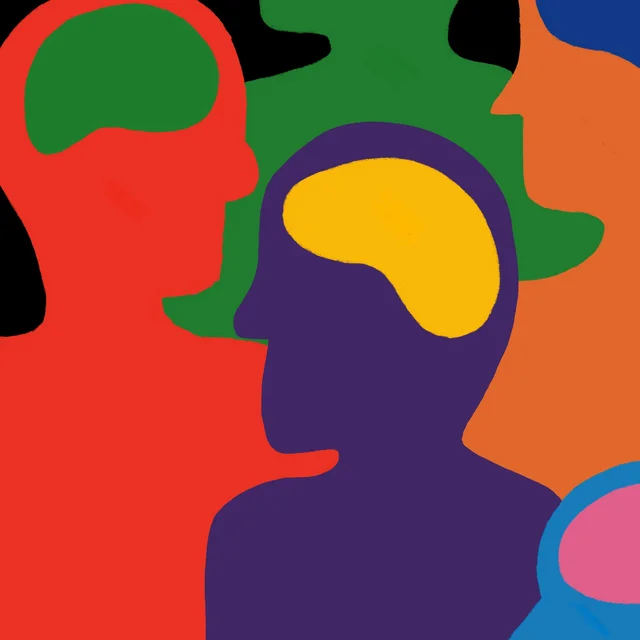
The revolutionary foundation of neurodiversity studies emerges from the neurodiversity model which challenges the dominant discourse that suggests Autistics and other neurodivergent people are broken, unhealthy, and have deficits or sicknesses and that Autism and other neurodivergences need to be eradicated, prevented, treated, or cured. The neurodiversity model instead argues that neurodivergent people are part of a natural variation of neurology within the human population similar to how there is a natural variation of organisms within ecosystems (i.e. biodiversity). The coinage of the word “neurodiversity” is referencing biodiversity.
The model was invented in 1998 by an Australian social scientist, who herself Autistic, wanted to recognized as different with many unique abilities, rather than pathologized, as someone who needed to be cured. The model suggests celebrating natural brain differences and considers them necessary for the human ecosystem.
Since the emergence of this model, we now have terms like neurotypes, neurodivergences, and neurotypical. A way to think of it is as operating systems. Neurotypes are the different operating system options. Everyone has a neurotype. Apple is the most popular operating system, and for the sake of this metaphor, it is the normative or typical operating system. Neurotypical defines people who don’t have a neurodivergence, people who are considered the neurological “norm.” Like how Android and Windows are alternative operating systems, some people have neurodivergences, operating systems that differ from the typical operating system. We all complete the same functions but have different strengths and skills as well as different weaknesses and problems.
Neurodiversity studies scholars also invented the term Allistic to define anyone who is not Autistic. This means if you are neurotypical, or do have a neurodivergence different from Autism like ADHD, you are Allistic.
2. Disability Models and Ableism
The neurodiversity model is a better, more specific alternative to older, broader, more traditional, and problematic disability models, like the medical and charity models. Disability models are not exclusionary to each other as you will see. The medical and charity models are complementary with each other, and the neurodiversity model is complementary with the social model. I will now define these other models along with some other important terms.
The medical model is a model that pathologizes disabilities and neurodivergences and emphasizes cure or treatment. The medical model sees disabilities and neurodivergences as flaws of the individual that need fixing.
The charity model is a model that infantilizes and patronizes disabled and neurodivergent people by suggesting we are charity cases, or are children, or need help, or otherwise inferior.
Both these models combined have caused great harm to disabled and neurodivergent people by fueling ableism.
Ableism is discrimination, prejudices, and/or biases against those who are disabled or perceived to be disabled. Given the intensity of your podcast and the richness of its conceptual frame, it is very important to give the viewer enough time, and visual materials, to support, illustrate, and help the memorization/understanding of these comments while you present them
There is systematic ableism which can be seen in the form of problematic and harmful institutions that claim to support neurodivergent people such as Autism Speaks; laws and regulations that restrict the freedom and equality of people with disabilities; social policies that seek to “care for” disabled people” through intensive supervision, protection, and isolation from everyday society; and policies and practices that seek to reduce or eliminate disability from society, not just as a perceived benefit to any individual disabled person, but as a perceived benefit to society as a whole.
A major contributor to systematic ableism and more specifically, cultural biases and widespread misconceptions towards Autism, is from the United States’ biggest organization for Autism: Autism Speaks. To offer some background, Autism Speaks was founded by parents of Autistic children with no involvement from the Autistic community. They lack any neurodivergent voices on its national board. When they finally caved to outside pressure, they added one and then they left the board in less than a year. Autism Speaks has promoted eugenics, saying Autism needs to be eradicated and cured. A quarter of their money goes towards trying to find a “cure.” Other good case studies of this organization’s problematic positions are their 2005 “I am Autism” ad and their 2006 “Autism Every Day” documentary in which they describe Autism as this looming disease ready to pounce and infect or possess your children, using various metaphors from diseases to demons. Very little of their money actually goes toward improving the quality of life of Autistic people. If you don’t get anything else from this episode, it is don’t support Autism Speaks and tell your family and friends not to fundraise for it. They don’t represent us. However, organizations like the Autistic Self Advocacy Network and the Autistic Women & Nonbinary Network do.
Other than systematic ableism, there is individual ableism which can be seen in the form of wrong attitudes and mentalities about disabilities and neurodivergences; and problematic social habits, statements, and behaviors towards disabled and neurodivergent people that assume a lesser status for a person because of their disability or neurodivergence; and Ableism operates under the assumption that disabled people are inherently less capable overall, less valuable in society, and/or should have less personal autonomy than is ordinarily granted to people of the same age.
Another significant disability model is the social model. While broader than neurodivergences, it is very complementary with the neurodiversity model. The social model suggest that it is not those with disabilities with the problem but actually society’s fault for making itself inaccessible to those who operate and live differently in the world. A friend told me a way to think about it is if most people had wings so they got rid of all elevators and stairs and those who didn’t have wings could no longer get where they need to go. The social model implies that people are made disabled by how things are designed, not born disabled.
The neurodiversity model and the social model reflect a postmodern view of disability, suggesting that norms are constructed and thereby, we can live in a society that understands differences in mind and body and can be designed to accommodate these differences.
It is important to realize that neurodiversity studies are pushing for a mentality change, not a language change. Oftentimes, in today’s culture, we think we need to change language to avoid being offensive without really internalizing why the change is being made and how our attitudes and thoughts should change. We can fall into the trap of making socially acceptable euphemisms, rather than having real discourse. While the content of your podcast is, thus far, very thought-provoking, I am just wondering how it can be transmitted in a pedagogically feasible manner. In other words, I wonder how your words must be presented and illustrated to help the listeners during their view of the podcast, due to the labyrinthine structure of your speech.
In fact, we have fallen into this trap before. We see it with the words: “special education”, a term that used for students outside the norm in education, the top 5% and the bottom 5%, before being used exclusively for the bottom 5%. The word “special” has became a euphemism for more offensive terms used for people who struggle in our education system. We also see it with “differently-abled” and person-first language, saying “person with Autism” instead of “Autistic person.” We might think we are being more politically correct or more neutral, but we are actually offending people with subtle ideologies that most disabled and neurodivergent people disagree with. “Differently-abled” seems to be an avoidance of the word “disabled” when disabled people have pride in the word “disabled” and prefer its usage. Autistic people including myself have a problem with person-first language because many of us see Autism as an integral, central, and beautiful part of our identity. Person-first language also reinforces the medical model, viewing Autism as a infliction or disease, rather than part of how we are wired like our personality. ==Excellent comments==
3. Autistic Rhetoric & Communication
In my contributions to neurodiversity studies, I focus on Autistic rhetoric and communication. To complement the social model and the neurodiversity model, I am working on a communications model. I remind my listeners that communications is a field I read literature in and participate in even if I am no longer a declared major in it. By training and preference, I am primarily interested in Autism as a difference in language and rhetoric. I like to think of Autism as a different first language, a different set of codes we are born with, that guide our unique perception, thought, way of operating, and communicating.
When I was told to adapt in middle school to the people around me, what I realized is that I needed to learn the “neurotypical language”, I needed to learn how to think and communicate like them in order to survive and thrive. I did so while still having my original language, the Autistic language, and still being able to understand other people with Autism like my brother.
Forms of Communication
This kind of study naturally involves a study of different kinds of communication.
One kind of communication I am interested in is intrapersonal communication, which is your self-discourse or self-dialogue. Some might view this kind of study as being an entirely field, psychology, but I have deep problems with psychology, especially abnormal psychology, as it has often been done by scientists who are neurotypical and don’t actually understand our minds, how we are thinking in our heads, like we do with first-hand experience. Abnormal psychology is one of the biggest culprits of ableism, contributing to, and publicly spreading, such bad ideas including flawed ideas of intelligence, mental age, and theory of mind, concepts used to belittle and dehumanize neurodivergent people; suggestions that the mentally ill are violent when they are actually much more likely to be victims of violence; and suggestions that healthy variations in neurological wiring are unhealthy and require a cure which have contributed to dehumanizing of people by stigmatizing their difference and using the name of science to do so. Therefore, I prefer the study of our minds in a humanities discipline like communications where personal perspectives and subjective experience are more valued.
There is also intracultural communication, communication between people of the same or similar culture. For my research, I look at how people with Autism interact with other Autistic people or other neurodivergent people, which I will show later on, proves that Autism is a language difference as neurodivergent people understand each other better than with neurotypical people.
And finally, there is intercultural communication, communications between people of different cultures. For my research, I look at how Autistic and neurodivergent people interact with neurotypical people, more specifically, I look at communication barriers and miscommunications between neurodivergent and neurotypical people.
Language Differences & My Lived Experience
One of my experiences that made me realize Autism is a language difference is my experience with speech therapy. I was stuck in speech therapy in middle school and my first year of high school because I jumped around in conversation too much and seemed to go “off-topic.” What I learned is that I think up connections and ideas that confuse neurotypical people which made me have to learn to adapt to speaking “neurotypical.” In college, since interacting with more Autistic students, I realize that my natural thinking and communication makes sense to other Autistic students and is harder to grasp by neurotypical students.
4. Allyship & Support
We will now talk briefly about how to be an ally to neurodivergent people.
First off, it is important to recognize that disabled students and neurodivergent students are marginalized groups that lack in certain privileges. We need to be included in any Equity, Diversity, and Inclusion work. We are outside the norm, like other marginalized groups, which creates oppressive situations, and we need to be able to stand on two legs.
One way to do this is to include us in the conversation. Our voices are important and should be considered.
When I tell you, I have Autism or anyone tells you they have a neurodivergence, don’t treat me differently, not even if its well-meaning. Don’t patronize me. I am not a child, an infant, or someone you need to have pity for.
Reassure us that our voices are important and that we are intelligent. I have to worry about conforming to a stereotype, a stigma, that people with Autism are stupid. This phenomenon is common in marginalized groups and is called a stereotype threat. “Stereotype threat is a situational predicament in which people are or feel themselves to be at risk of conforming to stereotypes about their social group.” This in particular has led me to having imposter syndrome. Also, because dominant discourses have suggested that Autistic/neurodivergent people are incapable of critical thought and are subhuman, our voices have been silenced and our voices have been told to not matter. Fight this.
Autism is a spectrum. We are all individuals and have different problems and need different supports. A good way to think about it is “If you know one Autistic person, you only know one Autistic person.” Don’t ever assume what someone is going to be like because of a neurodivergent condition.
Don’t tell us we don’t seem Autistic or that we have overcome it. You don’t overcome the way you are wired.
Some neurodivergent people believe their neurodivergence is a disability while others believe it is just a beautiful difference with its benefits and flaws. Some even think it is both. The disability model and the neurodiversity model are not necessarily contradictory or exclusive. I fit in the camp of it only being a neurodifference since I feel I have gotten many benefits from it and have overcome what challenges in neurotypical society it might have created for me. The important thing is to listen to neurodivergent voices and be accepting of their beliefs even if you don’t agree.
A debate in the Autistic community is the preference of referring to them as a “person with Autism” versus an “Autistic person.” For those that believe it is a disability, they may want person-first language used to refer to them. For those who believe it is a beautiful neurodifference and want to emphasize their pride, they may want identity-first language used to refer to them. This is the more popular preference. Respect their preferences the same way you respect people’s pronouns.
“Special” and “differently-abled” are ableist as well as “low-functioning” and “high-functioning”. Please refer to us as disabled and neurodivergent and look at us as having different needs, problems, and traits, rather than simply being up and down on a functioning dial.
If we do anti-ableist practices like this, we can make neurodivergent students more comfortable to come out about their neurodifferences. I could pretend to not have Autism as it is not visible but I believe it is a beautiful part of who I am, and I hope you will be able to see that too.
5. Prose & Poetry: Lived Experience Through Storytelling
To give a taste of some of the podcast’s format in future episodes, I now want to share two prose works and one poem. The podcast in its regular episodes will combine theory with storytelling (i.e. prose and poetry).
For my first example, I offer a piece I wrote for Autism Acceptance Month which is April. It discusses neurodiversity is a meaningful mentality change with requirements to learn about neurodivergent people and reflect on how we treat neurodivergent people and, not a simple language change. The work is called “Seeing we are different is not enough. You must understand how we are different.”
Autism Acceptance Month Prose
April is Autism Acceptance Month, not Autism Awareness Month. Autism is NOT a disease. So, this is a friendly reminder for people in these short 30 days that Autistic people think, feel, communicate, and operate differently. In the world we live in, these differences are oppressed. Our struggle is not Autism but a society that tries to eliminate Autism.
In the past two decades, we have seen more and more people learn about neurodiversity. I question, however, how much people have truly accepted neurodiversity. The main premise is that Autistic/neurodivergent people have natural differences that should be celebrated. Unfortunately, this idea can be bastardized and assimilated into the dominant myth of the healthy, superior norm and the inflicted, inferior other. This happens every time any marginalized group challenges the grand narrative with alternative and contradictory stories (i.e. the history of African Americans being “whitewashed”).
We have also seen this with the idea of “special” education. “Special” was simply to denote abnormal learners, however, it has become a stigmatized and derogatory label, a label that acts as a euphemism for the politically incorrect term: “retarded.” “Different” and “divergent” are terms to denote abnormal minds, however, without fundamental restructuring of what Autism is in individuals’ minds, these terms are destined to have a similar fate, being neutralized and assimilated into the narrative it wants to eliminate. The points of neurodiversity are missed if neurotypicals don’t understand that Autistics are not “retards” but have a unique perspective that challenges normative thinking; if they don’t understand that Autistic people are actually emotional and empathetic people but the style is different and maybe incompatible with their normative ideas of empathy; and that Autistic people are not socially “retarded” or have a deficit in communication, but rather than speaking a different language that other Autistic people can understand and prefer. The revolution of neurodiversity can only be successful if it changes people on the individual level.
This has real consequences in everyday life for neurodivergent people as false ideas of Autism have led to neurotypical people to pity and “stupidify” Autistic people, especially in educational contexts. Autistic people are discussed as having learning difficulties, having social problems/incompetencies, being slow readers, rambling too much, and getting off-topic. This justifies putting Autistic students in separate classrooms to get material they supposedly missed or to work on reading faster. This justifies putting Autistic students in speech therapy to work on social or “conversational” skills so they can be understood, stay on topic, and be “normal.” These systems do not directly and boldly benefit Autistic people and usually work to develop stigmas around their Autistic existence.
Collective experiences for Autistic people include: Being talked down to like you are stupid because you have a certain label and despite being quite intelligent in many ways; getting lumped into the same separate classroom with non-Autistic but special education kids and being told what you heard in class like you didn’t get it; being taught how to work and read faster like a machine instead of allowing Autistic people to think the way that is natural to them which is taking their time to process the information and is usually deeper than their peers; being taught how to have “normal” conversations with less rambling and less moving between topics when other Autistic people understand the rambling (a product of a high-processing brain) and the connections between topics they are making since Autism has a poetic, a rhetoric, a language, and is not inherently wrong or broken.
Because of the education system, Autistic people are socialized and taught to act more normal. This leads to masking which is self-surveillance of our behaviors to make sure they are normal. Masking is a form of social control through socialization. Masking leads us to hide certain behaviors like stimming our hands and legs, to learn to speak the neurotypical language (which is great except neurotypical people don’t make the same effort), and to funnel our thoughts to be simple. Socialization of Autistic people also leads to stigma which is apparent by talking to some Autistic people and seeing them torment themselves over being passionate about something as they ramble and then apologize for it or ask if the other person understands. More evidence of stigma is how Autistic people feel ashamed to ask for help because they don’t want to be seen as needing extra support when the reality is different, when the reality is we need DIFFERENT supports because we have fundamentally DIFFERENT brains and DIFFERENT needs. We need to stop acting like neurotypical people get less support than us, they are privileged and get the right kind of support from a society built for them.
"Being Autistic Is..."
The next prose work is called “Being Autistic is…” which is a list that reflects on my own experiences as an Autistic person.
- Being Autistic is speaking a fundamentally different language from the normies, thinking, communicating, operating differently.
- Being Autistic is having a different rhetoric and empathy style that other Autistics understand. Look it up: “the double empathy problem.”
- Being Autistic is developing differently from the normies, developing atypically, having different strengths, weaknesses, needs, and problems than the normies, but still somehow being considered inferior.
- Being Autistic is being told you have problems and weaknesses that make you inferior despite being better than normies in certain areas.
- Being Autistic is only having a neurodivergence because society is neuro-normative and advocates for neuroconformity, in other words, creates a norm and pressures people into this norm by making systems not work for us, and worse, work against us.
- Being Autistic is having agency in a society that doesn’t think you do have it.
- Being Autistic is needing a society that will stop being oppressive and will support Autistic people thriving in neurotypical society without losing their authentic Autistic self.
- Being Autistic is being told by abnormal psychology and doctors that you are an unnatural, unstable, and thereby, unhealthy deviation from the typical, natural, and more stable mind and other horrible false ideas.
- Being Autistic is being told you are a problem child, and that your radical, out-of-the-box thoughts are dangerous or at the very least, weird, and you need to be silenced.
- Being Autistic is like being a sponge, your brain hyper processes and tries to take everything in.
- Being Autistic is having a brain that is so busy that it outpaces your mouth and keeps you from being able to relax and go to bed.
- Being Autistic is having several thoughts, several voices speaking at all times, forcing you to hyper focus and hyper organize those thoughts.
- Being Autistic is being frustrated that you had an interesting thought but in the busyness of your brain, it is lost.
- Being Autistic is learning to create a funnel or filter from your brain to your mouth so you can make sense to neurotypicals while dealing with people thinking you’re slow but actually your mind is too fast.
- Being Autistic is balancing adapting yourself for neurotypicals and learning and speaking their language versus sacrificing your authentic self and losing your own gifts and talents that come from Autistic thought and language.
- Being Autistic is connecting bits of knowledge together that neurotypicals don’t see as connected and being criticized for getting off topic.
- Being Autistic is processing things slower but better; thinking so fast that it takes time to break things down and come up with conclusions.
- Being Autistic is needing music while studying to fill the background, to fill the void, to round and calm us when we get a little overwhelmed or need a mini break.
- Being Autistic is having a brother who is also Autistic and nonverbal and seeing ABA therapists trying to train him to be good instead of listening to his needs and pleads for help that are causing the bad behavior in the first place.
- Being Autistic is being told by parents of Autistic children that you have a mild version and that their more severely Autistic children need to be cured.
- Being Autistic is being told by anti-vaxxing parents that vaccines cause Autism and that in a world where vaccines do actually cause Autism, they would rather their child have polio, which paralyzes and kills you, than Autism.
- Being Autistic is being told you’re a smartass by your teachers when you legit take things literally and have no smartass intentions.
- Being Autistic is being represented by a terrible national organization called Autism Speaks founded by parents of Autistic children without any "#ActuallyAutistic" voices, without any meaningful involvement from the Autistic community, without a single Autistic person on their national board. Autism Speaks NOT for Autistic People.
- Being Autistic is being represented by a terrible national organization that believes in eugenics and spends most of their funding on a bullshit “cure” to eradicate Autism instead of spending that money to make the quality of individual lives of Autistic people better.
- Being Autistic is being represented by a terrible national organization who spread bad ideas about Autism, comparing Autistic people as being inflicted with a disease or being possessed by a demon.
- Being Autistic is having your mother agree with any statement said in Autism Speaks’ terrible “I am Autism” ad where Autism is depicted as an ominous thing that infects your children and ruins your family’s life or any statement said in Autism Speaks’ 2006 documentary “Autism Every Day” in which they describe Autism as the devil possessing your children.
- Being Autistic is having your mother yell at you and tell you’re stupid or don’t listen because you have auditory processing issues, a hard time processing spoken words.
- Being Autistic is having great "#ActuallyAutistic" organizations like the Autistic Self Advocacy Network and the Autistic Women and Nonbinary Network overshadowed by the evil and powerful Autism Speaks.
- Being Autistic is driving through a Sonic and being asked if you want to donate to an organization that hurts your community, the Autistic community.
- Being Autistic is saying no to donating at a Sonic and then crying at the sight of signs made by parents hanging on the windows of the restaurant saying “please fund a cure for my child.”
- Being Autistic is seeing a birthday fundraiser from your hated biology teacher’s brother on Facebook for Autism Speaks and feeling deeply hurt by how popular fundraising for the organization is.
- Being Autistic is realizing that people actually think Autism Speaks supports the Autistic community and are thus, blindly virtue signaling support and donating money without realizing how that money is used.
- Being Autistic is regretting telling people because of all the stereotypes, biases, and misconceptions about Autism that the public has and the different treatment you get.
- Being Autistic is being tired, feeling weathered by ableist wounds inflicted on us every day.
- Being Autistic is asking yourself if your strangeness is your brilliance when others say you’re just strange.
Narcissus Poem
The final work is a poem comparing the similarities and differences between Narcissus from the Greek myth and an Autistic person as people falsely stereotype Autistic people are self-absorbed and incapable of being empathetic like Narcissus. For context, Narcissus is a hunter in Greek Mythology who was known for his own beauty but rejected all romantic advances including one from the nymph Echo.[1] Aphrodite punished him by luring him to a pond and making him fall in love with his own reflection where he stayed until his death.[2] After the poem, I break it down and analyze it.
Am I Narcissus?
Am I the man who fell in love with himself,
Whose ego became bigger than his soul,
Who stared long into the pond,
Who fixated on his own image, incapable of shaking off its view,
With everything else in the world out of focus,
Who died knowing only the self,
Or do I stare long into the pond to understand the world?
I am, we are, better than Narcissus!
We are looking at the self to create a stable image
In the ever-changing mirror images of the pond.
We are looking at our faces to understand all that is contrast to,
While simultaneously comparative, to them.
We empathize for others by remembering our own ever-changing images in front of the pond.
We know how these images change and
Invite others to see how theirs will change as well.
We use the self to know the world and to navigate it,
Narcissus uses the self to love himself.
Through our mirror in the pond,
We see those who walk by it, who come into its reflection
We try to copy the actions of these reflections
We ask if these imitations are really us.
We ask if our own reflections are broken.
When disruptions come to the reflection of the pond or our viewing of it,
We try to focus our energy on finding our faces in the reflections.
As the image of our faces clarifies, we can start to clearly see the rest of the reflections. Disruptions can come due to rocks making ripples in the quiet pond
Or due to taking our focus to the clouds and away from the pond.
For us, the mirror image of the pond is a tool to understand.
Poem Analysis
In this poem, I start by asking if Autistic people are Narcissus, a being only focused on his own face and has no interest in other faces. When I say, “I am, we are, better than Narcissus”, I am referring to other Autistic people and myself and making the claim that we are different and in fact, better than Narcissus. I suggest we are different because we are staring “long into the pond to understand the world” and our place in it. ==Great point! You could include some art-related examples to better illustrate this comparison, Matt.==
This false stereotype applied to Autistic people is because neurotypical people misperceive the intentions of Autistic people who have a naturally unconventional, non-normative empathy style. Rachel Zamzow has defined this misperception as the “double empathy problem” saying that “communication breakdowns between autistic and non-autistic people are a two-way issue, caused by both parties’ difficulties in understanding” connected to unique empathy styles, ways of thinking, or language.[3] Our natural empathy style is to try and offer advice or solutions to problems and compare their experiences to our own experiences, rather than trying to comfort and/or just listen. Comparing experiences makes it seem we are moving the focus to ourselves when we are just using what we know, which is ourselves and our own experiences, to try and solve the problem. I call this empathy style: a self-referent and solution-focused consciousness. This doesn’t mean we can’t comfort and listen, but we need to be told that it is needed because it is not our natural go-to. I would argue this empathy style shows more compassion than the traditional empathy style because we do not just go through the motions of showing care and actually try to help our friends solve their problems so they can be happier.
The stanza “We are looking at the self to create a stable image / In the ever-changing mirror images of the pond” is referring to how we rely on the self and our understanding of who we are to stay calm and understand the complex world we are in that is constantly changing. The self, who we are, acts as an anchor in reality, and while it can be upset by trauma, it has more stability than the rest of the world we have even less control over. The next stanza “We are looking at our faces to understand all that is contrast to, / While simultaneously comparative, to them” is referring to how we rely on understanding the self to understand the other [anything outside the self]. The next three stanzas are getting at the idea that we know who we are (hyper self-aware) and remember the experiences we have and pay attention to how we change, and are able to help others figure out who they are and navigate through their experiences, their problems. In the stanza, “We see those who walk by [the pond], who come into its reflection” is referring to how we come to understand others by comparing them to us and in the stanzas, “We try to copy the actions of these reflections / We ask if these imitations are really us”, we admit we imitate others and their behaviors but ask more often if these imitations are us. Unfortunately, due to being treated as inferior by our neurotypical peers, we also ask “if our own reflections are broken”, the reflections that are our own and not imitations. The next five stanzas are talking about disruptions to our understanding of the world including distorted reflections and the times we look away from the reflections to be in our abstract imagination in our heads and how we and how we focus on the self to regain focus on the world outside the self. The final stanza summarizes the poem, stating that unlike Narcissus who is focused on loving himself when looking at the reflection in the pond, “for us, the mirror image of the pond is a tool to understand.”
Conclusion
To conclude, we have explored neurodiversity and various models and concepts that are relevant to understanding neurodiversity studies and the lived experiences of Autistic and other neurodivergent people. We also read some of my prose and poetry that reflects my lived experiences as an Autistic person and challenges common bad ideas about Autism.
In this episode, I shared my interest in neurodiversity studies which explores neurodivergences from the perspective and experiences of those who have neurodivergences, is informed by my lived experience, and is a major contributing piece in my own research.
Our next journey will be an introduction to art history and Psychocentrism. We will discuss basic theoretical ideas in art history and then discuss my particular interest in exploring 20th century academic and cultural developments exploring the psychological.
Endnotes
“Narcissus,” Encyclopædia Britannica (Encyclopædia Britannica, inc., 2021), https://www.britannica.com/topic/Narcissus-Greek-mythology. ↩︎
“Narcissus,” Encyclopædia Britannica (Encyclopædia Britannica, inc., 2021), https://www.britannica.com/topic/Narcissus-Greek-mythology. ↩︎
Rachel Zamzow, “Double Empathy, Explained,” Spectrum / Autism Research News, August 5, 2021, https://www.spectrumnews.org/news/double-empathy-explained/. ↩︎
Original episode notes · September 24, 2024
About this episode
This episode will be an introduction to neurodiversity studies, an emerging field in academia that explores the experiences of Autistic and other neurodivergent people using theories within critical theory and studies, cultural studies, sociology, and anti-oppression pedagogies. In the same way, there is queer studies exploring cultural ideology, societal oppression, and divergent experiences within sex and gender; neurodiversity studies explores all these things within neurology.